.svg)
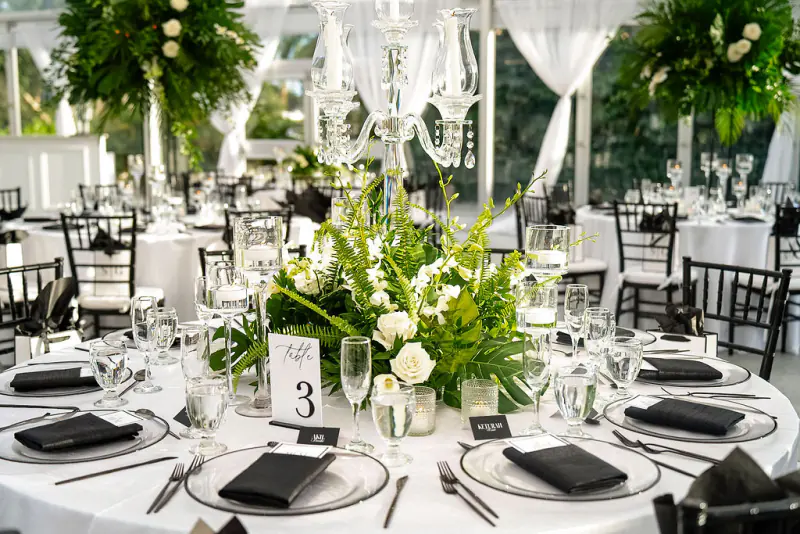
Couples planning a wedding in Miami often bring expectations shaped by celebrations in their home countries or their families. Sometimes those expectations differ from the service policies, contracted hours or operating restrictions at the venue they’ve chosen. When that happens, my job is to understand what matters to the couple and their guests, explain the venue’s boundaries clearly, and propose a practical way to deliver an experience that still feels familiar. With the right service arrangements and a realistic budget, couples can keep the hospitality and relaxed atmosphere they value while respecting the venue’s requirements and protecting their guests’ safety.
Where Family Traditions Meet Venue Rules
A Miami wedding often brings together guests from several countries, and every family arrives with its own idea of what a good celebration looks like. Those ideas are personal. Two couples from the same country can have completely different traditions, so I never assume. I ask.
Venues have their own framework. Each one sets service policies (who serves food and alcohol, and how), contracted hours for your event, and operating restrictions such as a closing time or a sound cutoff. Your caterer, bar team, entertainment and other vendors are each booked for a defined service period too. None of this says one way of celebrating is better than another. It’s the framework your wedding has to work within, and it’s written into your contracts.
Start With What You Want Your Guests to Experience
In my work, couples have asked for arrangements that feel familiar to them but aren’t permitted at their chosen venue. When that happens, my first question is what they want their guests to experience. The request is usually a way to reach that experience, and once I understand it, we can often find another way there.
| The request | What it’s about | What we can propose |
|---|---|---|
| Liquor bottles on each table | Guests feel looked after and stay comfortably seated | Table service from a staffed service bar, with a beverage menu at each table |
| A celebration that goes on for hours | Dinner and meaningful moments that never feel rushed | An earlier start and additional hours, contracted in advance with the venue and every affected vendor |
Can We Put Liquor Bottles on the Tables at Our Wedding?
Usually not, and it’s rarely just the venue’s preference. Whoever holds the liquor license for your wedding (the venue, your caterer or a bar company) is responsible for how alcohol is served. In Florida, that includes making sure no one under 21 is served. Many license holders won’t leave bottles on the tables, but you can still give guests attentive drink service at their seats: a staffed service bar behind the scenes, additional servers who take orders and deliver drinks to the tables, and a beverage menu that makes ordering easy.
Some couples have asked me to place liquor bottles on the dining tables so guests can serve themselves. For them, it’s part of familiar hospitality. They want guests to stay comfortably seated with their families rather than get up and wait at a bar.
When self-service isn’t an option, I explain why professional oversight matters. A wedding brings together guests of every age, from grandparents to teenagers, and bottles left on the tables make it impossible to control who pours a drink. They also take two judgment calls out of the professionals’ hands: how quickly drinks are served, and when a guest has had enough. Your guests’ safety is part of what’s at stake.
Clubs offer bottle service, so couples sometimes ask why a wedding can’t. A nightclub can check every guest’s ID at the door and assign staff to each table. A wedding has neither. Beyond the law, the license holder’s insurance requirements or house policy may add conditions of their own. I ask which ones apply, because that shapes what can be approved instead.
What table service looks like
- A staffed service bar behind the scenes, where the authorized beverage team prepares every drink.
- Additional servers assigned to the tables to take orders and deliver drinks.
- A beverage menu at each table, so guests can see what’s available and order easily.
Guests enjoy attentive service at their seats, and the authorized beverage team keeps control of preparation and service. The spirit of the original request stays intact: everyone is looked after at their own table.
What to confirm before you plan around it
Table service needs approval from both the venue and the beverage provider, and it may increase staffing and setup costs. Discuss it early, so the cost is in your budget from the start. Questions worth asking:
- Who holds the liquor license for our event: the venue, the caterer or a bar company?
- Can your bar team take orders and deliver drinks to guests’ tables?
- Can a service bar be set up out of guests’ sight, and where?
- How many additional servers would we need for our guest count, and what do they cost?
- Is table service part of the bar package, or billed separately?
How Do We Plan a Longer Reception That Doesn’t Feel Rushed?
Plan for the time, and pay for it in advance. Where the venue permits it, an earlier start and additional contracted hours, agreed with the venue and every affected vendor, let us build breathing room into the day. Extra time doesn’t override a curfew or sound restriction, and it doesn’t automatically extend every vendor’s service.
Some couples and their guests are used to celebrations that continue for many hours, and tightly timed transitions can feel unfamiliar. Nobody wants dinner or a meaningful family moment to feel hurried.
Why a reception runs on a set schedule
There’s no single answer to how long a wedding reception lasts. At a Miami venue, it lasts as long as your contracts allow. Venue packages are often sold as a set block of event time: the package at The Glass Venue includes five hours, for example, and Villa Woodbine’s catering packages include a five-hour open bar. Your caterer, bar team, DJ or band, photographer, videographer and other vendors are each booked for their own service period. The location may also have a firm closing time or sound cutoff. Villa Woodbine has an 11 PM curfew, for instance, while other venues sell extra hours. Confirm the rules for yours before you build the timeline.
How to add time the right way
- Consider an earlier start. If the venue has a firm end time, the beginning of the day is the only place left to add time.
- Contract additional hours with the venue, if it offers them, before the wedding rather than on the night.
- Extend every affected vendor, not just the venue. Catering, the bar, entertainment, photo and video, and transportation each have their own agreement.
- Build the breathing room into the timeline. Use the extra time where it matters to you: a longer dinner, unhurried toasts, or space for a tradition your family loves.
We still need a timeline and a clear ending. The flexibility comes from planning and paying for enough time in advance, not from assuming the event can run beyond the agreement or an applicable restriction.
Budget for the Experience You Want
Both solutions usually cost more than a standard setup. Table service can mean additional servers and a separate service bar. A longer event window means additional hours from the venue and from each vendor whose service is extended. These are conversations for the start of planning, when they can shape the budget, not the final weeks. Your guest count matters here as well, since staffing scales with it; we cover that in 2026 Miami Wedding Insights.
A Celebration That Still Feels Like Home
A couple should be able to recognize their own traditions and hospitality in their wedding. My role is to help them understand what’s possible at their chosen venue and make informed choices about service, timing and budget. The aim is a celebration that feels familiar to the couple and their guests, and works responsibly for the people hosting it.
How We Help Couples Bring Their Traditions to a Miami Venue
We ask early. Your traditions and the experience you want for your guests shape the plan from our first conversation.
We take your requests to the venue. We bring them to the venue and beverage provider and confirm what they’ll approve, and at what cost, before you commit.
We align every vendor to the same event window, so extra time is covered by everyone who needs to be there.
We plan in Spanish and English, and build the timeline around the moments that matter to your family.
Common Questions About Wedding Traditions and Venue Rules
Can we put liquor bottles on the tables at our Miami wedding?
Usually not. Whoever holds the liquor license for your wedding (the venue, your caterer or a bar company) is responsible for how alcohol is served, and in Florida that includes making sure no one under 21 is served. With guests of every age at the tables, many license holders won’t allow bottles there. Ask about table service instead: servers take orders and bring drinks from a staffed service bar, so guests can stay comfortably seated.
Nightclubs do bottle service. Why can’t our wedding?
Bottle service works at a nightclub because the club can check every guest’s ID at the door and assign staff to each table. A wedding brings together guests of every age without an ID check, so the license holder can’t control who pours from a bottle left on the table. Staffed table service gives your guests a similar experience: drinks brought to their seats, without anyone waiting at the bar.
How can wedding guests get drinks without waiting at the bar?
Ask your venue and beverage provider about table service: a staffed service bar behind the scenes, additional servers who take orders and deliver drinks to the tables, and a beverage menu at each table. It needs their approval and may add staffing and setup costs.
Can we have a self-serve bar at a Miami wedding venue?
Ask before you plan around it. The decision belongs to whoever holds the liquor license for your event, and many license holders require their own staff to serve all alcohol, which rules out self-serve setups. Where self-service isn’t allowed, staffed table service is the closest alternative.
How long is a wedding reception at a Miami venue?
As long as your contracts allow. Venue packages are often sold as a set block of event time, five hours at some Miami venues, and each vendor is booked for its own service period. Some venues also have a firm closing time or sound cutoff, so confirm your venue’s rules before you build the timeline.
Can we extend our wedding reception?
Plan it in advance. Where the venue allows it, contract an earlier start or additional hours with the venue and every affected vendor before the wedding. Extra hours don’t override a curfew or sound restriction, and adding time with the venue doesn’t automatically extend your other vendors.
Do you plan bilingual and multicultural weddings in Miami?
Yes. We plan in Spanish and English and help couples bring their own traditions and hospitality into the day, within each venue’s rules.
About the author: Tahimy Don is the Founder & Lead Planner of Tahimy & Co. Events, a wedding and event planning company based in Miami. For over a decade, she has planned weddings, quinceañeras and milestone celebrations across South Florida.